Composting Food Scraps: Clean Energy Equivalencies

I’ve been focused on clean energy and sustainability for my whole career, with a singular focus on how I can help in the generational challenge of fighting climate change. While professionally that passion has taken me to work with the U.S. Department of Energyclean energy entrepreneurs, and more, I always try to stay cognizant that I need to walk the walk in my personal life as well. I’ve tried consistently to find new and impactful ways to bring that green mentality home with me. In my house, we drive an electric vehicle, we eat an entirely plant-based diet, and we do our best to reduce excess power consumption– though the thermostat will always be a battlespace!

I’d qualify these actions as great starts, but I knew we could always be making more progress. As I explored my next potential steps one option kept coming up: composting.

As we had recently moved from a 500 square foot studio apartment in Washington DC to a much more spacious townhouse in Orlando, Florida, I realized the green dream of composting could finally be a reality! Like a good sustainability-minded citizen, I went to the Orlando city government page to request a free composter that I had heard about. Thanks to the City Beautiful, I thought!

Only clearly I hadn’t done enough research, because the city dropped off the following behemoth (rubber ducky for scale):

While this large composter perhaps made sense for homes with yards and gardens, we’re in a townhome with no yard, no space at all to put this monstrosity even if we tried. So, instead, the composter continues to live in our garage with its only purpose currently being to provide shelter for the anole lizard we named Liz who lives in our garage and eats any bugs that venture inside.

Discouraged, but not defeated, I still wanted to find a way to divert the plentiful food scraps we produce from ending up in a landfill. I ended up reaching out to the Office of Sustainability & Resilience in Orlando to ask for further advice. The Sustainability Project Coordinator who responded was as enthusiastic as I was and had a handful of suggestions and tips. Not feeling ready to jump into vermicomposting that would bring worms into a composter in my home, I jumped at the suggestion to check out the local company O-Town Compost that offers a program that picks up your food waste, does all the dirty work of composting, and ensures your food scraps are handled as sustainably as possible. That option sounded great to me, so I reached out to O-Town to learn more about that exciting program. And as I began that composting adventure, I wanted to bring readers along to the thinking that brought me there from the perspective of an energy professional exploring the world of compost.

What is Composting?

Most of us have heard of composting in the most basic of terms before, with it being centered on the idea that organic material can decompose or biodegrade back into its component forms and become a part of nutrient-rich soil. Having waste become plant food as opposed to sitting in a landfill is of course a more ecological end of life, and that’s why you’re seeing more products being made with compost friendly materials, such as straws, cups, and cutlery.

To dig a tiny bit deeper, composting is the natural process of turning organic material, including food scraps and lawn clippings, into a rich soil that brings vital nutrients to plants. When organic matter is decomposed in a purposeful, deliberate, and careful way, a really valuable compost is the result. That organic material can be left to decompose on its own and the process of the nutrients returning to the Earth will still occur, but over the years, scientists, gardeners, and other experts have optimized the process of composting. By balancing brown material, green material, and the right amount of water, the compost material created will help plants grow, suppress pests in the soil, minimize the need for chemical fertilizers, and so much more.

But to be honest, I’m no green thumb and I don’t have a garden that needs compost. I’m in it for the climate angle of it all. So, let’s jump to that.

Shrinking Carbon Footprints Via Growing Compost Piles

If organic material like food scraps will naturally decompose and return their nutrients to the Earth even without proper composting, then how exactly does intentionally composting have a net impact on the planet? The answer has everything to do with what happens to your organic material (banana peels, potato peels, and so much more) when you throw them in the trash rather than the compost bin.

When food scraps go into your trashcan and end up at landfills, most people would assume the biodegradable nature means they will simply decompose naturally. The truth is, though, that for any biodegradable material that ends up in a landfill, it’s actually “similar to tying food in a plastic bag,” according to the U.S. Environmental Protection Agency.  The food scraps quickly get covered in layers and layers of trash, restricting it from receiving the oxygen needed for sustainable decomposition. Rather, over time those food scraps will end up rotting and release methane instead of the more preferable byproduct of carbon dioxide, which is especially concerning given that methane is orders of magnitude more potent of a heat-trapping greenhouse gas than carbon dioxide.

Source: Brittanica

So, as often becomes the case in my articles, the next step looks to be to crunch the numbers on exactly what the climate impact is of your decision to compost vs. throw away food scraps. Luckily for me and the overworked spreadsheet programs on my computer, some really good work on this analysis has already been done by Sally Brown of Biocycle. I’ll leave my notepad holstered now and build upon the back of the envelope she’s already filled with calculations.

Note that Ms. Brown’s calculations are being generous to assume certain characteristics of landfills, including that they are capturing a certain amount of the methane being released and turning that into usable energy, and in doing so it means certain generalizations are utilized while each community may have different end numbers in practice based on the makeup of their landfills, whether they are capturing landfill gas for power generation, and what the carbon intensity is of that local power generation mix that the landfill gas is offsetting.

According to Ms. Brown’s data, a decent landfill with 50% collection efficiency will end up producing enough energy to provide for 0.23 tons of CO2 credits, while at the same time emitting enough methane that amounts to 0.75 tons of CO2 debits. Put together, consumers end up coming out about 0.52 tons of carbon dioxide equivalent (CO2e) in the hole for each ton of food waste sent to landfills. On the other hand, a poorly operated compost pile will release 0.21 tons of CO2 per ton of food waste and a well-managed compost pile will release 0.02 tons of CO2 per ton of food waste. Note that looking at EPA’s 2017 numbers, the assumption of 50% collection efficiency appears generous as 6.3% food scraps in that year got composted, 18.4% were passed into energy recovery, and 75% simply went to landfills. But we’ll go with the optimistic data presented, nonetheless.

So, by those metrics, every ton of food scraps you send to a service like O-Town Composting or compost in your yard is sparing the plant from roughly 0.5 tons of CO2e. To put in more digestible (conceptually, not anaerobically) terms, each person in the United States is responsible for 218.9 pounds of food waste. If that were all sent to compost, 109.5 pounds of CO2e could have been avoided annually per person.

Note: Before moving forward, I would be remiss if I didn’t mention a few of the other most important things you can do in the kitchen to minimize these food-related emissions. The first is to minimize food waste in the first place: don’t buy more food than you need, budget your grocery shopping so you can eat food before it goes bad, and make sure to share, freeze, or otherwise use your leftovers as much as possible. The second is to eat a more (or wholly) plant-based diet. Animal agriculture is responsible for much more emissions on a per pound / per calorie basis compared with plants, so eating lower on the food chain is one of the single most impactful habits you can take for your personal carbon footprint. Of course, major corporations in the food supply chain should also play a critical role in minimizing wasted food that ends up in landfills and using less carbon-intensive ingredients whenever necessary, as well.

What’s the Energy Equivalence?

Since I always want to equate everything to energy terms, let’s put those potential savings in that context:

A household of four would be responsible for 875.6 pounds of food scraps per year. Diverting those scraps from the landfill to the compost pile would prevent 437.8 pounds of CO2e. Assuming a U.S. average of 0.99 pounds of CO2 released for every kilowatthour of electricity consumed, other ways that family could prevent the release of 437.8 pounds of CO2e in a year include the following:

That’s just one house, but what about if the composting trend took off? Experts have noted that green decisions seem to be ‘contagious’ in a neighborhood or community. For example, “the number one indicator of whether someone will put solar on their rooftops in the future is whether they know someone who has done so first. When you install solar, it has a domino effect in positive behaviors. The fact that your neighbor can look at your solar panels and ask you questions has more impact than just listening to experts on TV or online.” The same can be said for composting behaviors creating a chain reaction. According to the previously mentioned 2017 EPA numbers, of 40.67 million tons of food waste generated, only 2.57 million tons gets composted compared with 7.47 million tons sent to energy recovery and 30.63 million tons sent to landfills. What if 10% of that currently landfilled waste was composted? An additional 3.1 million tons of compost would prevent 1.53 million tons of CO2e annually. That level of emissions reductions would otherwise require:

While the above certainly shows that composting alone won’t solve all the world’s climate issues, not by any stretch, it does demonstrate the individual and collective impact this relatively easy undertaking can bring. And when you consider the relative cost to compost compared with any of the other measures (shutting down power plants and building up new generation sources is a highly costly endeavor) identified, or even the difficulty in doing so (cutting 500 miles driving or using 20% less AC will be a tough ask for many families), composting starts to look pretty good—whether that’s getting involved with a service like O-Town Composting or just getting some good equipment for your home and getting to work in your backyard.

As Sally Brown noted in her calculations: “Composting won’t bring these (greenhouse gas) concentrations down below 350 parts per million [to achieve necessary climate guys], but it will buy us some time.” And time may very well be the scarcest resource we have left in the climate fight—so don’t delay, get started today!

Do you have any other ideas on ways on implementing sustainability into your life that you’d like me to run the numbers on? Let me know in the comments below or on Twitter.

This is a featured blog post from Matt Chester, who writes for his blog, The Chester Energy and Policy.

You Are What You Eat Eats

Michael Pollan’s book, “In Defense of Food” can be summarized as a potent 200 page read. It dives into the standard Western diet, and how it’s fueling a nutritional crisis despite a general obsession with “nutritionism.” This phenomena is also known as the “American Paradox.” On one hand, you look at a country like France, where people love eating fat-rich foods deemed toxic by american nutritionists, yet they have substantially lower rates of heart disease than we do on our elaborately engineered low-fat diets. What gives?

There are an array of reasons the American diet is conducive to obesity and poor health, but the one that stuck out was how our country’s food lacks nutritional content, and is strikingly high in carbs. USDA researchers have found “reliable declines” in the amount of protein, calcium, phosphorus, iron, vitamin B2, and vitamin C in fruits and vegetables over the past half century. To get the same nutritional content in an apple grown in the 1950s, you may have to eat double or even triple.

Whether we’re talking about edible plants or animals, it all starts with the soil. Farmers who use soil with a high amount of organic matter, and don’t use artificial fertilizers, produce a crop with a higher nutritional density. This may require an annual application of compost, but overtime the farmer will see increased yields, lower irrigation costs (since compost has great water holding capacity), and reduced money spent on pesticides and fertilizers. (Check out this California almond farm that boosted its bottom line by focusing on soil health. )

The industrial food chain routinely overlooks soil health as a factor in creating a nutritious product. It should be obvious that healthy soil goes on to grow a strong plant or lush fields for animals to graze on. The animal or human consuming that plant would internalize those same nutrients, and be diversifying their intake.

Instead, farmers mostly look at the big three nutrients; nitrogen, phosphorus, and potassium (MPK). These cause crops to grow and yield faster, but ultimately create an imbalanced weaker plant that attracts insects, and has shallower roots.

It’s not as simple as saying “eat organic.,” because oftentimes organic produce comes from California’s industrial farms, or even as far as China. With such a long distance traveled to get to your plate, much of the nutrition is lost in transportation. Ideally, you want to look for produce that is both organic and local, such as a Fleet Farming CSA, or what you can find at the farmer’s markets.

Although, when you do find yourself in the grocery store, as a rule of thumb, imagine shopping with your great-grandmother. If she wouldn’t recognize it, the so called “food” is probably a creation of the industrial food system, and you want to avoid it.

UOC garden.jpg

Reducing Trash and Saving Money by Diverting Your Food Scraps

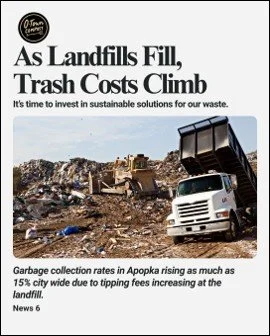
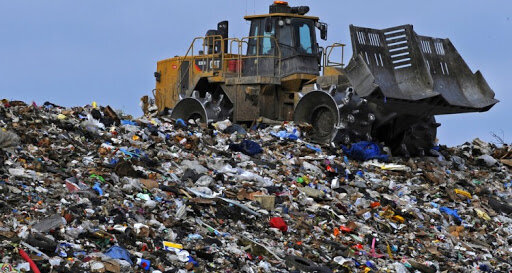
It’s hard to understand why composting is so necessary for the environment unless you take a trip to the face of the Orange County landfill. You witness the seemingly endless organic waste being dumped from dawn to dusk, the horrible smell of methane, and the loud beeping of bulldozers pushing trash into mountain-sized piles. It’s disheartening to say the least.

Our trash goes to OC Landfill on Young Pine Rd.

Our trash goes to OC Landfill on Young Pine Rd.

Compostable and recyclable material comprises between 70-80% of what goes to the landfill for disposal, meaning that the vast majority of what we throw away has a home either in your curbside recycling cart or with O-Town Compost’s composting program. This is the stuff that should be easy to divert right? Unfortunately, it takes a fair amount of education to teach people that there’s value in material even after it’s been consumed.

Also, not to let the corporate producers off the hook, but there needs to be greater extended producer responsibility (EPR). Some consumer products are just about impossible to recover, based on the way they’re made. DuPoint and Dow Chemical are great examples of Fortune 500 companies that would rather go to great lengths to get their single-use Styrofoam or plastic products labeled “recyclable” than actually shut down production and go a different route. Believe me, I’ve done consulting work for Dow Chemical’s Hefty Energy Bag Program, taking place in Cobb County, GA and Boise, ID, and it’s a perfect example of shucking responsibility and taking the path of least resistance to appear like they care about the environment. Green washing.

Despite the gloomy reality, a change is a comin’ (in the melody of Sam Cooke). The community composting movement is sweeping the country, and O-Town Compost is laying the ground work here in Central Florida to make it convenient for people to do the right thing with their food waste.

Right off the bat, after signing up, O-Town Compost subscribers experience firsthand a lighter and cleaner trash. The 96-gallon cart that most municipalities give their residents becomes WAY more than one needs. Less trash going to the landfill means huge cost savings for our local governments, longer life for our landfill, and a healthier environment. OTC’s subscribers should be rewarded with a reduced price on their trash services bill. For example, many Massachusetts towns have implemented a Pay As You Throw program, incentivizing its residents to waste less. Those who choose not to recycle their food waste, pay more. Basically, the program functions where households pay a variable rate for garbage collection depending on the size of the container they choose with the smaller the size being cheaper.

Saving $ with an OTC subscription

Saving $ with an OTC subscription

Having a black and gold O-Town Compost bucket not only reduces your volume of trash, but also saves subscribers money in the form of helping them buy groceries in right-sized quantities. Inevitably, everyone has food scraps that are inedible (banana peels, avocado pits, cucumber skins, etc), but it’s the uneaten leftovers and expired food sitting in the back of the fridge that really hurts the pocketbook. When you’re consciously separating your food waste from your trash, you begin to take note of your purchasing habits. “Maybe I shouldn’t have bought two containers of spinach, even though it was buy 2 for $5." Just one would’ve sufficed.”

In the next 10-20 years, our new norm will be to source separating food waste from the trash. For those who are getting on board early, it’ll be a lot less uncomfortable in the long run to adapt.

Composting 101

Charlie Pioli gives a presentation on food waste recycling, including vermacomposting and his reviews of different backyard composters. Why is composting better for the environment than standard recycling, and what is O-Town Compost able to accomplish on the community composting scene in Orlando, FL?

Slinging Buckets and Composting Orlando's Food Waste

O-Town Compost’s Charlie Pioli, gives you a look into Orlando’s community composting business with his big plans for the future. It’s never been so easy to recycle your food scraps into soil amendment while supporting the local food system at the same time! Join our movement!

How to Build a Worm Bin with O-Town Compost

Worm bins can be a simple yet effect way to recycle food scraps into premium plant fertilizer (worm castings), or just to keep a constant supply of fishing bait on hand. Regardless, watch our video to learn how to set up your own bin. Or, for between $50-80, we can come out and do it for you, and get you started with enough Florida Red Wigglers to get you going. Email us at info@o-towncompost.com.

As a plant fertilizer, worm castings “contain all the essential nutrients that plants need in addition to enriching the soil in which the plants are grown. Not only can this fertilizer be used on nearly any type of plant, it can also be used directly on plants without burning them and can even deter unwanted insects. Worm castings can be applied as top dressing, side dressing, or worked into the soil.” - Gardening Know How

Charlie Pioli of O-Town Compost shows us how to build a worm bin and shares some other useful tips for composting at home. If you live in the Orlando, FL are...

Compostable Doggie Bags and Gloves! NOW FOR SALE

Whether you’re a dog owner or someone looking for a solution to avoid single-use plastic, we got you covered! Now on our compostable serviceware page, we are offering a variety of compostable dog doo bags, and food prep gloves that can also be worn for everyday use to protect against COVID19. Help O-Town Compost starve the landfills of plastic.

Food Prep Gloves (Medium) - 200
$20.00
  • Restaurant quality

  • Food grade certified

  • 100% compostable

  • Powder-free

  • Multi-purpose (use them for protection against COVID19)

Eco-Pooch Compostable Dog Bags - Belly Band (x18)
$3.00

Leash Dispenser Rolls – Rolls of 18
– Dimensions: 8.25″ x 6″ x 5.5″ high

Please note that O-Town Compost does NOT accept pet waste in our composting program yet! See what we do accept on our FAQ page.

Eco-Pooch Compostable Dog Bags - x 120
$10.00

Standard Doggie Bags – Rolls of 120
– Dimensions: 8″ x 12″ x 6″ high

Please note that O-Town Compost does not accept pet waste in our composting program yet! See what we do accept on our FAQ page.

O-Town Compost's vision for the future

It’s been seven months since O-Town Compost entered the Orlando compost scene and we’re happy to say that we’ve been busy! Four tons of food scraps have been diverted from the landfill and turned into O-Town Black Gold thanks, in large part, to our dedicated subscribers!

The composting network has grown to a brigade of residential and a handful of commercial composters, such as offices, cosmetic retailers, and a coffee shop. We have our first Zero Waste Wedding under our belts, and were set to do more until the great COVID monster stomped through town, making social gatherings a thing of the past. Instead of immediately going into panic mode, we decided to diversify our offerings, and the On-Farm Composting Service was born to address the manure management headache that some stables and ranches constantly face. With our first stable on board, we are able to divert roughly 1,100 pounds of manure weekly, and create a beautiful soil amendment with a waste byproduct. A byproduct that some stable owners unfortunately pay to be hauled to the landfill.

Still, with all our small stories of success, we’re not quite comfortable yet. We have a long road ahead to fully address the waste problem and a lack of regenerative agriculture in Central Florida. Small isn’t necessarily bad for a community-focused business, but we’re going to need to grow in order to make serious strides in Orange County’s environmental landscape.

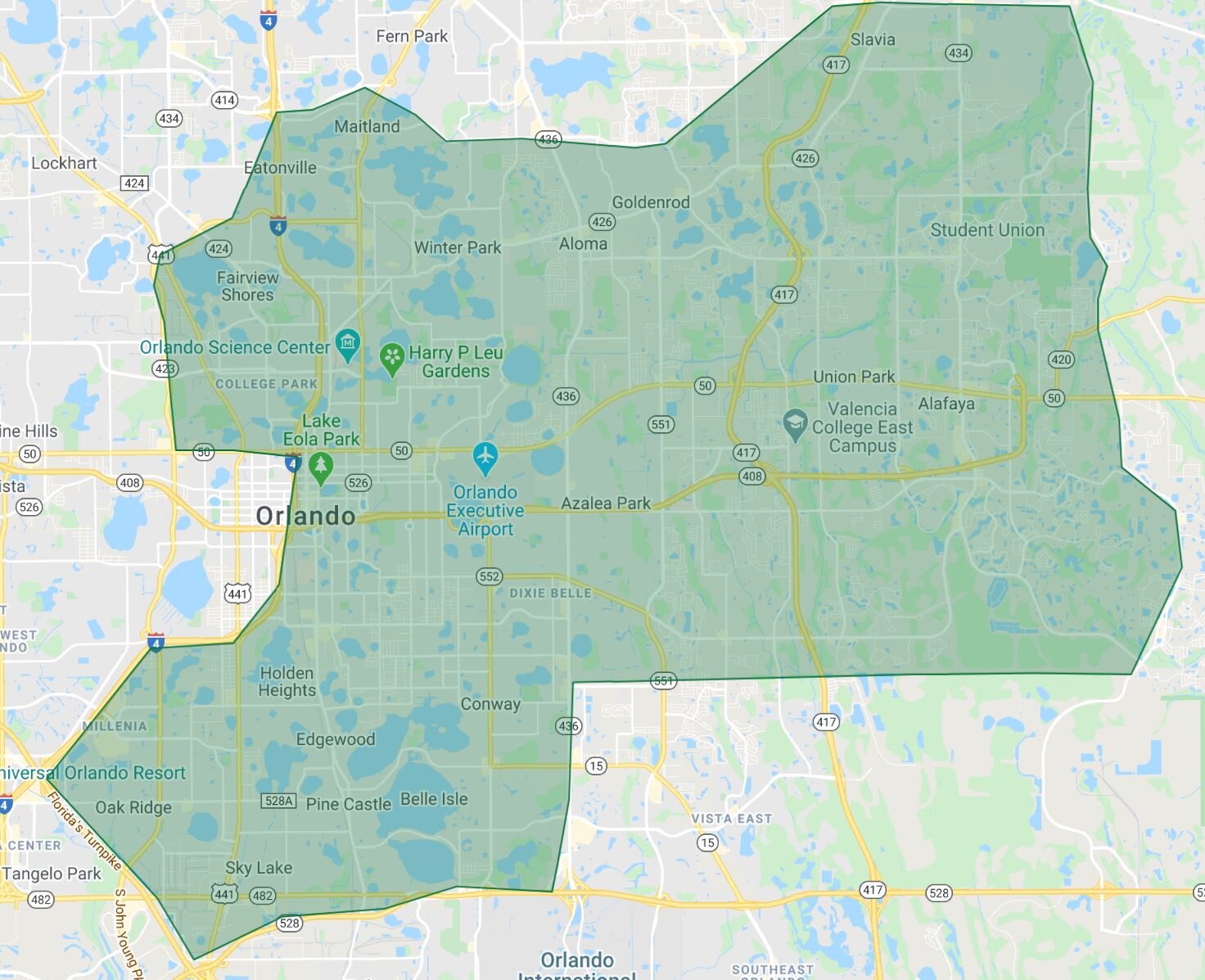
Right now we offer food waste collection in 16 zip codes in the county, or roughly a third of the land area. The public should look for an expansion in the next 6 months to West Orlando (West of I-4). When you request service on our contact page, we take note, and tally the number of requests from each zip code with the aim to get out there soon.

Another opportunity for growth is building our partner network. For example, stables, ranches, landscapers, etc. Any environmental operation that produces an organic byproduct that can be composted. We offer our partners a sharing of ownership on the finished compost product, and a solution to their waste byproduct. Imagine, a decentralized network of local composting facilities around Orange County, rather than the traditional approach in the waste industry, where there exists a giant, centralized facility. The benefits of small are that a smaller facility requires lower transportation costs, smaller operational costs when you are dealing with less waste, and, most importantly, the finished compost stays in the community! This, my friends, is how we break the hold of industrial agriculture and Big Waste.

We Need Your Support! Contact a Representative Today!

O-Town Compost has been on the Central Florida community composting scene for 7 months now, and has been steadily growing. Our goals are to grow food waste recycling infrastructure around the region, and support sustainable agriculture while doing so.

If you like what we do, please contact your local politician and let them know about your support for our mission. An individual’s voice goes a long way in letting our elected officials know that O-Town Compost is making a difference. You don’t have to be a subscriber to see that what we’re doing is moving the needle.

We appreciate you writing an individual heartfelt message, or you can use the template below:

————————————————————————————————————————————————————-

Subject: On Behalf of O-Town Compost, Orlando’s Community Composter

Dear [insert title and name of city representative],

I am writing to you as a concerned [name of municipality] resident, who strongly supports striking a balance between economic growth and environmental conservation. In [name of municipality], wasted materials are mounting daily while the infrastructure to recycle that waste is substantially inadequate. Single-stream recycling has proven to be an uphill battle, as Material Recovery Facilities (MRF) fight contamination and cannot find end-markets for their recyclables. According to multiple recent studies, 99 percent of truck loads carrying recyclables in the County were rejected at Waste Management’s MRF last year, and transported to the Orange County Landfill as a result. That means that nearly 100 percent of everything we put out to the curb as residents is ending up trashed.

This is a serious problem as the state is running out of landfill space. Fortunately, we have another option to reduce our waste footprint, and that is composting our organic waste, which makes up a sizable 40 percent of all that goes to the landfill. Moreover, adding organic waste to our landfills contributes to greenhouse gas emissions, including methane and CO2.

O-Town Compost is a small-scale community composter that is making a huge impact with its food scrap collection service, converting both pre- and post-consumer food waste (including meat and dairy wastes) into finished compost for local agriculture projects, such as Fleet Farming. Its mission is to grow into an organization that can handle the majority of Central Florida’s organic waste stream (including animal waste, such as horse manure), and transition the Orlando-area into a circular economy.

Small community composting businesses, similar to O-Town Compost, are active in cities and counties around the nation and are proving that they can move the needle in keeping food waste (as well as pet waste and other organic materials) out of our landfills. This frees up space for non-recyclable trash, and reduces greenhouse gas emissions produced by our landfills. O’Town Compost’s model (https://o-towncompost.com/ ) is similar to Bootstrap Compost in Boston, MA and Rust Belt Riders in Cleveland, OH.

I am writing to you today to voice my support for their efforts in our community, and I would like to see [name of municipality] find ways to incentivize residents and businesses to use their services. Ideally, food waste collection and composting should save cities money, while solving our landfill challenges and beautifying our green spaces with organic compost.

I greatly appreciate your attention to this issue.

Sincerely,

[Your name and address]

————————————————————————————————————————————————————

Here is a list of some politicians you can email, depending on which area’s jurisdiction you fall under:

Winter Park, FL

Steve Leary - Mayor of Winter Park, FL - sleary@cityofwinterpark.org

Marty Sullivan - Commissioner Seat #1 - msullivan@cityofwinterpark.org

Shelia DiCiccio - Commissioner Seat #2 - sdeciccio@cityofwinterpark.org

Carolyn Cooper - Commissioner Seat #3 - ccooper@cityofwinterpark.org

Todd Weaver - Commissioner Seat #4 - tweaver@cityofwinterpark.org

City of Orlando, FL

Buddy Dyer - Mayor of Orlando, FL - buddy.dyer@orlando.gov

Jim Gray - District #1 - jim.gray@orlando.gov

Tony Ortiz - District #2 - tony.ortiz@orlando.gov

Robert Stuart - District #3 - robert.stuart@orlando.gov

Patty Sheehan - District #4 - patty.sheehan@orlando.gov

Regina Hill - District #5 - regina.hill@orlando.gov

Bakari Burns - District #6 - bakari.burns@orlando.gov

Orange County Unincorporated (To find your district & commissioner: https://www.orangecountyfl.net/BoardofCommissioners.aspx#.XrAW_6hKjD6)

Jerry Demings - Mayor of Orange County, FL - mayor@ocfl.net

Betsy VanderLey - District #1 - District1@ocfl.net

Christine Moore - District #2 - District2@ocfl.net

Mayra Uribe - District #3 - District3@ocfl.net

Maribel Gomez Cordero - District #4 - District4@ocfl.net

Emily Bonilla - District #5 - District5@ocfl.net

Victoria Siplin - District #6 - District6@ocfl.net

First Batch of Compost Will Be Distributed to Subscribers Early!

To show our immense appreciation for our loyal Orlando subscribers in the time of the COVID19 pandemic, we thought it was time to give back, and move everyone’s distribution date up early. Due the shutdown, more people are at home cooking and gardening, and it just makes sense. This doesn’t mean that our subscribers WON’T receive their regularly scheduled share 6-months from their subscription date either. Everyone who selected to “receive” their share of compost will still be delivered an additional 20 lbs 6 months from the date they hit “subscribe.” All we ask is to please empty the bucket, and put it back on your porch for us to collect during a normal pickup day, so we can keep reusing them. (Fun Fact: The 3.5-gallon compost buckets are old cream cheese icing buckets from Publix!)

Four hundred pounds of compost is going out this week and next to our subscribers who selected to receive their shares, and 400 pounds are going to Fleet Farming as a donation to their urban gardening efforts. A total of 800 pounds of O-Town Black Gold will be recycled into the community to improve our soil’s health! That’s right…Thanks to your banana peels, flower trimmings, and coffee grounds we have finished the composting process on our first batch of compost! We encourage you to use it in your vegetable gardens, as a potting mix, or just sprinkle it through your lawn to improve the seeding process.

Isn’t #CommunityComposting a beautiful thing?

IMG_2806.jpg

Say "no" to plastic, and go compostable

We are excited to announce that we are now selling compostable food serviceware items such as cups, plates, bowls, utensils, straws, etc. Additionally, we provide easy-to-use Kitchen Caddy bins that sit on your kitchen counter making it extremely convenient to add food scraps to while cooking. And the key to keep them yuck-free is to line them with our compostable liners!

We guarantee that our products are actually “compostable” not just “bio-degradable.”

We deliver to anyone in our service-area, with deliveries to our subscribers/clients being free. Otherwise, it’s a $5 delivery fee. Thank you for supporting community composting! Let’s turn Orlando green!

Composting Continues

Well guys, we've made it to the middle of April. 

We're still operating (food waste collection services are considered waste haulers, and that is considered an essential service). 

Food waste is being created now more than ever (we hear folks asking for MORE buckets because they are cooking more frequently). 

Some of you are gardening (it’s a good time to create a victory garden and stay resilient to shocks in the food system like this . 

Amazing connections are occurring (keep up the good work, everyone!).

We send all our best to the O-Town community - 

NEW SERVICE! - On-farm Composting

The equine industry has a significant presence here in Central Florida, and with a great number of horses comes a great deal of manure to be managed. At O-Town Compost we specialize in the collection and processing of people’s food scraps, but since the COVID19 pandemic started, we’ve decided to venture into a new areas and diversify our business offerings. Introducing our “On-Farm Composting Service,” where a wasteful byproduct is transformed into a valuable resource.

The average horse generates 45 pounds a day of manure, and closer to 55 pounds if you include the bedding! When I first read this statistic, I was shocked! Where does all this organic material go? Does it just remain on the farm or get hauled to the landfill?

Different stable owners do different things, but typically smaller stables spread their raw manure onto the pastures in hopes that it’ll fertilize and grow more grass for their horses to graze on. Whereas, larger stables, lacking the proper time or heavy machinery to spread manure, will opt for renting a dumpster to fill and send to the local landfill for disposal. One dumpster load can cost a couple hundred of dollars to haul, and contributes to the ever growing mountain of organic waste that notoriously comprises 40 percent of all landfill waste.

It just so happens that horse and cow manure are the perfect consistency to make a crumbly and earthy compost. Manure alone has around a 25:1 Carbon to Nitrogen ratio being perfect for the active composting process. No outside feedstock is necessary to achieve a quality final product, but something, such as food waste, can be added without negatively affecting the result. The longer you let the manure dry out, the higher its carbon content becomes and it becomes better to add a nitrogen-heavy food waste.

IMG_2743.JPG

Excitingly, O-Town Compost has begun construction on our first Aerated Static Pile (ASP) compost bin at Scala Stables located in East Orlando near University of Central Florida. Additionally, our services include regular weekly monitoring and upkeep, screening and transport of the finish compost, and technical assistance. Stable owners are left with a comprehensive instructional packet, and the ability to call anytime they’re experiencing a problem or have a question.

Advantages of choosing our composting method:

  • Eliminate the time and expense of off-site disposal

  • Produce finished compost in 60 days or less without turning the pile

  • Destroy parasites, pathogens and weed seeds in the finished product

  • Stop offensive odors

  • Significantly reduce flies, rodents and other pests

  • Improve your animals’ health

  • Create nutrient-rich compost product that is safe to use on pastures and gardens

  • Utilize the finished compost for an absorbent stall bedding

  • Earn revenue by selling your finished soil amendment and create a return on your investment

  • Enhance the appearance and value of your farm or stable.

If you or someone you know could benefit from this easy-to-use and environmentally friendly solution for on-farm waste management, please send us an email at info@o-towncompost.com.

Silly horse rolling around in the dirt.

Silly horse rolling around in the dirt.

Customer Feature - Jeannette from College Park

“Have you ever thought about composting??  Or maybe you have tried the city’s free compost bin and didn’t get good results- or worse you got flies and smells??  This was me too! I wanted to compost mainly to produce “good” dirt, but also for the environmental benefits- less waste going to the landfill and avoiding unwanted greenhouse gases.”

“I attended a seminar by O-Town Compost about composting and whoa – there was a lot more to it than I thought. You need the correct mix of nitrogen and carbon, right temp, enough water etc…well that seemed to be more than I wanted to take on in my back yard.” 

“That is where O-Town Compost’s food scrap collection service comes in. I tell you it could not be easier…you simply put your food scraps (and other approved items) in the provided air tight bucket and put it out for collection (weekly or biweekly).  No fuss no mess no smells no flies…composting for dummies!! I could not be happier with the service. Super easy and the company is awesome to deal with. Win – win…I get to compost with none of the hassle and reap the benefits in that twice a year I get some of that O-Town “black gold” to use in my yard!  At the same time diverting my food waste from the landfill to help the environment. You should definitely give O-Town Compost a try … you won’t be disappointed!”

otown.jpg

O-Town Compost welcomes three more zip codes into its service area! 32812, 32839, and 32809!

Due to popular demand, O-Town Compost is expanding its services. Are we still not servicing your zip code? Send us an inquiry to petition for your area! https://o-towncompost.com/contact

We track the number of customers in each area of town and regularly study our routes to see where new customers could be added. 

dfdf.JPG

O-Town Compost Celebrates Its First Ton Diverted!

Thank you to all our awesome subscribers and customers who are committed to food waste recycling in Orlando, Florida !!! It’s an exciting journey to be a waste warrior.

Celebrating!.jpg

O-Town Compost Extends Its Reach Into College Park! (32804)!!!

“Let the food waste come.” - Charlie Pioli, Founder of O-Town Compost (with a battle-worn yet determined look on his face)

We’re excited to welcome the residents of zip code 32804 to our expanded service area! The College Park area is an example of how a number of people in the community came together to request food waste collection service, and O-Town Compost listened. It’s much more efficient, environmentally and economically, for O-Town Compost to run a route in an area with a greater client population.

We are hoping to be able to stretch farther in the next year, as we gain traction around Orlando. I have a feeling West Orlando (Winter Gardens, Windermere, Ocoee, etc) will be smelling O-Town Black Gold sometime during 2020.

Compost On Orlando!

College Park joins the community composting movement.

College Park joins the community composting movement.